Guide Your next conversation starts here
How to Build a Daily Language Learning Routine That Actually Sticks?
Simple goals, repeatable study time, and a little practice every day. Build a learning habit that fits your life.
Learning a new language can be difficult. However, what’s more problematic is building consistency and continuously learning. Many people get tired of repeating their daily routine because they don’t see progress and are less motivated.
However, to see progress, you need to go beyond the ordinary and build a routine that actually brings measurable results. If you’re looking to build your daily language learning routine, then this blog will guide you throughout the steps. So, let’s begin:
Set a Clear and Realistic Goal
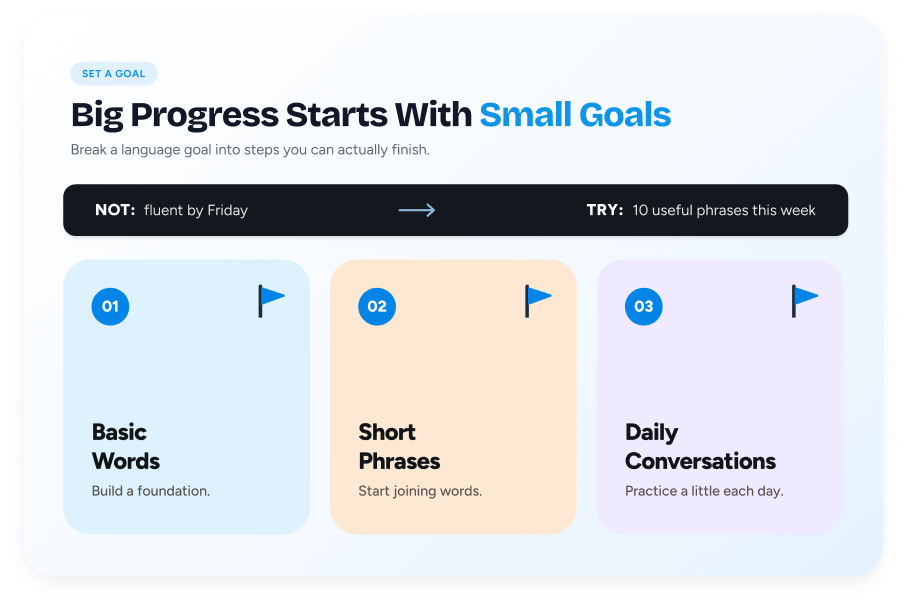
First, you need to set a realistic goal, something that you can actually achieve. Learning Spanish by the end of the month may seem like a great goal, but it’s not realistic. The reason for that is that it’ll take you more time to become fluent in the language.
Hence, set something clear. First, understand what you need to learn. Then, break them into achievable tasks. This way, you can achieve your goal by the deadline. It also keeps you motivated, builds a habit, and helps you progress steadily.
Choose a Study Time You Can Repeat
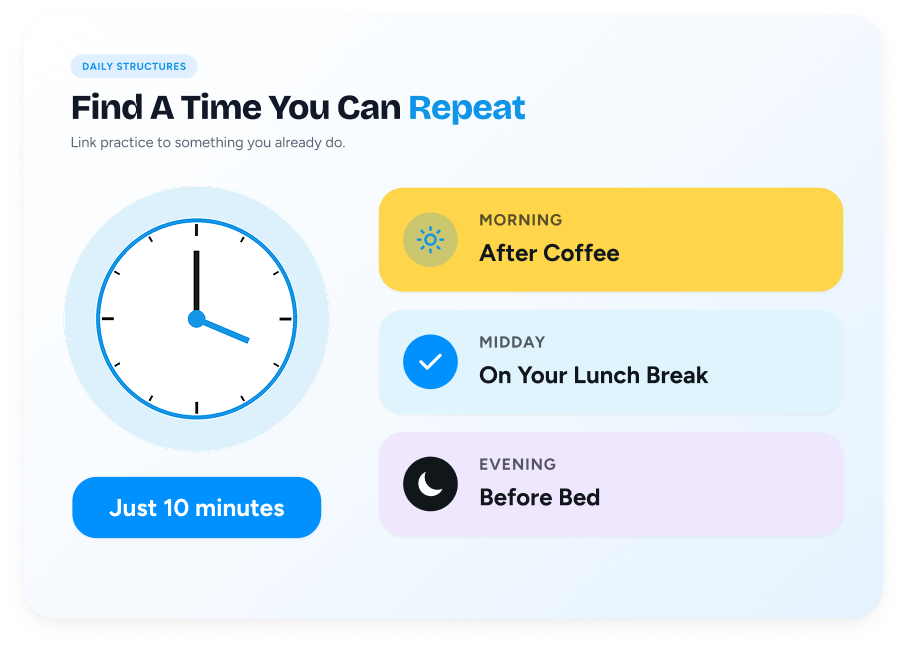
Most people struggle with making time for something they want to get done. For learning a language, you can pick a slot where you think you can manage it with other activities.
Morning coffee, lunch break, or 10 minutes before bedtime- you can easily choose when to practice and attach your learning. Think of it as an anchor with the activity, but pick the time when you think you can perform best.
If you’re an early riser, you can easily accomplish your learning quizzes in the morning. If you’re a night owl, you can get it done in breaks during the night. Repeat it consistently to form a habit.
Use a Simple Daily Learning Structure
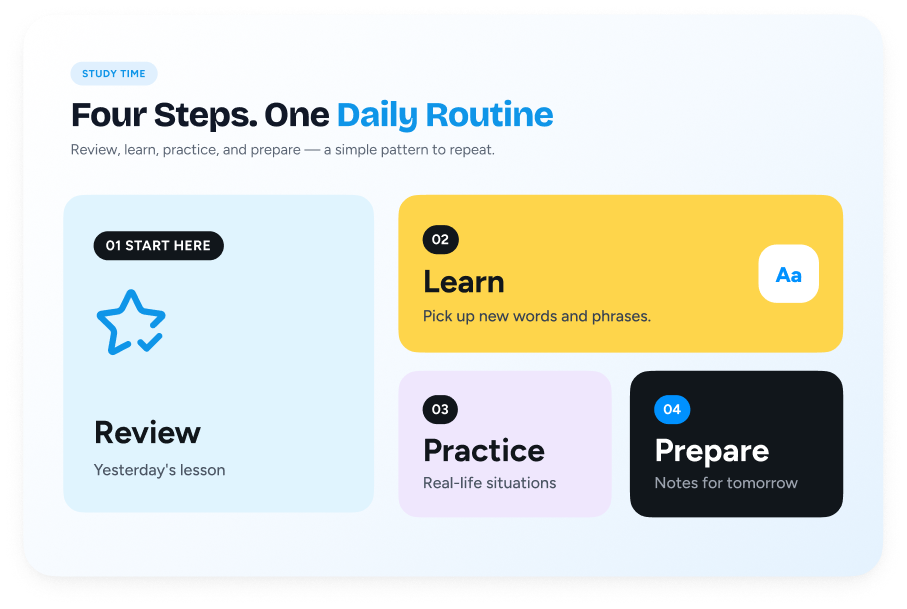
Now that you’ve picked a time for it, let’s get down to how to structure your learning pattern. Here’s how you can get it done:
- Warm up by reviewing yesterday’s lesson.
- Begin learning with a new chunk of words and phrases.
- Practice what you’ve learned in situational conditions.
- Close the learning lesson by preparing notes for the next.
A good way of achieving this is by using AI learning apps. If you’re using a Mac for learning purposes, you can learn languages on your Mac with HiLingo.
It combines:
- Short Lessons
- Quizzes
- AI Conversation Practice
- Daily Streaks
The idea is to start and follow the structure to keep progressing steadily.
Balance Vocabulary, Listening, Reading and Speaking
Most people think that learning a new language means learning vocabulary fast. However, there’s more than just learning vocab. For fluency, you need to consider the following apart from vocab:
- Listening
- Reading
- Speaking
You can practice each with your daily lesson to gain real-world experience. It also builds confidence, helping you achieve fluency as you progress.
Make Review Part of Your Routine
Most people put reviewing at the end of their daily routine, which is something to avoid. When learning, it’s important to remember what you’ve learned. You’re most likely to forget the basics without it. You can use flashcards, quizzes, or a simple notebook with dates beside each entry. What matters is that older material keeps returning in small doses.
In addition, you can reserve one session per week for a slightly longer look back, and notice which items keep tripping you up.
Example 10-, 20- and 30-Minute Plans
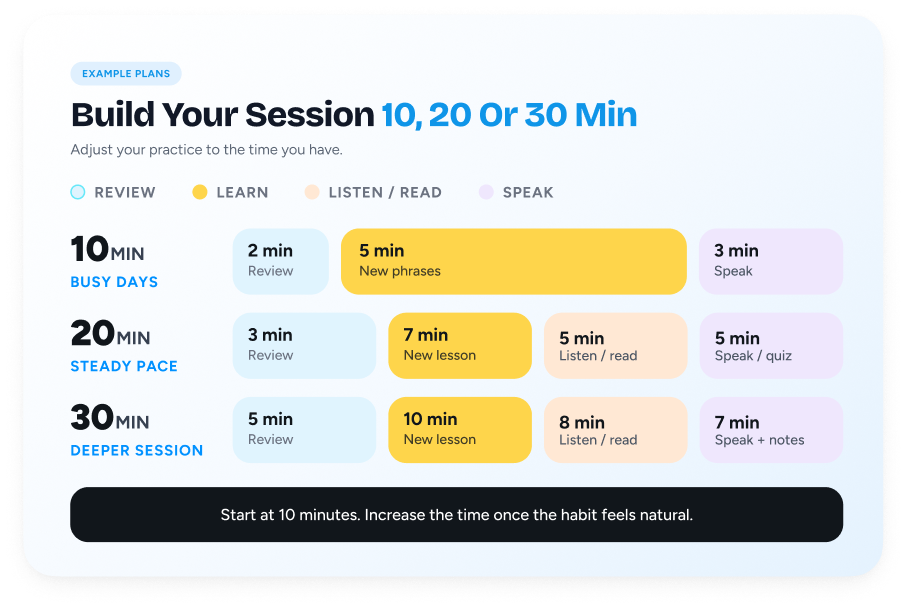
Ready to level up your language learning practices? Use these as templates and adjust them to your level.
10 minutes (busy days)
- 2 minutes: review yesterday's material
- 5 minutes: one short lesson or a few new phrases
- 3 minutes: say or write three sentences using them
20 minutes (steady pace)
- 3 minutes: review
- 7 minutes: new lesson
- 5 minutes: listening or reading practice
- 5 minutes: speaking, or a quiz to test recall
30 minutes (deeper sessions)
- 5 minutes: review
- 10 minutes: new lesson
- 8 minutes: listening or reading with a short clip or text
- 7 minutes: speaking practice, plus a note of what to review tomorrow
Start with the 10-minute plan even if you could do more. Move up only when it feels automatic.
Track Progress Without Losing Motivation
The key is to continue learning without losing motivation. However, that’s something many people struggle with. How do you continue learning without losing motivation? The answer is tracking your progress.
Even if it’s just a few words, make a directory of what you’ve learned today and keep it safe to revisit. This can also be used as a review directory where you can revisit to refresh what you’ve learned so far before starting a new lesson.
You can also set a streak counter with a check-in yourself. This keeps you hooked to your routine as you can track your progress in real-time. Moreover, you can also start writing a journal in your target language.
Use what you’ve learned so far to write something related to it. Create a story, write a script, explain a situation – whatever helps.
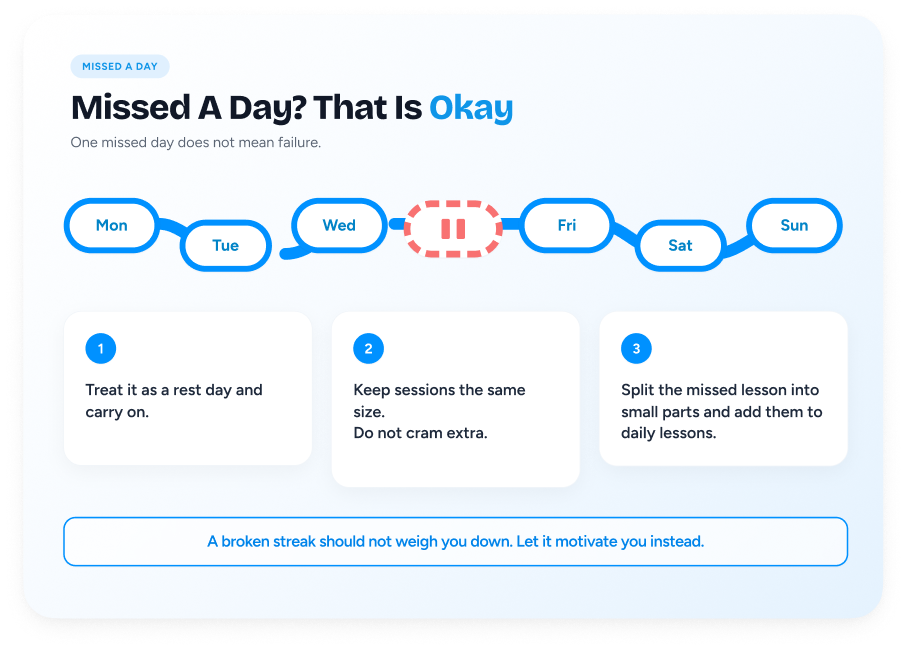
What to Do When You Miss a Day
Remember, there will be days when you’re too occupied or tired to do a lesson. However, it’s important to know that missed days don’t mean failure. You can simply take it as a rest day and continue with the routine.
Avoid making up for the lost time by practicing more, since that will increase your knowledge gap to review and practice. Keep the sessions the same as the ones you’ve been working on.
You can divide your missed lesson into smaller sections and learn them with your daily lessons to make up for them. In other words, a broken streak should not anchor you but motivate you to pursue further.