
Guide Your next conversation starts here
How to Practice Speaking a New Language When You're Learning on Your Own
Small, practical habits to build confidence and make speaking part of your everyday.
Learning a new language is fun, but most self-taught learners hit a block every time someone speaks in their target language. You can finish numerous lessons and complete quizzes, but when it comes to speaking in real time, your mind goes blank.
This happens when you practice only visually, on language learning apps, but not verbally. However, you don’t need a tutor to hit this milestone. This guide covers important aspects of practicing speaking a new language when you’re learning on your own with simple, practical habits that you can involve in your routine easily. So, let’s get started:
Why Speaking Practice Matters
Listening and reading about a new language can only get you so far. Speaking helps you pronounce words correctly, all in real-time.
Many self-learners feel stuck because their speaking ability remains flat. Hence, regularly practicing speaking is important because it helps build confidence and pronounce better.
Start with Short Daily Speaking Sessions
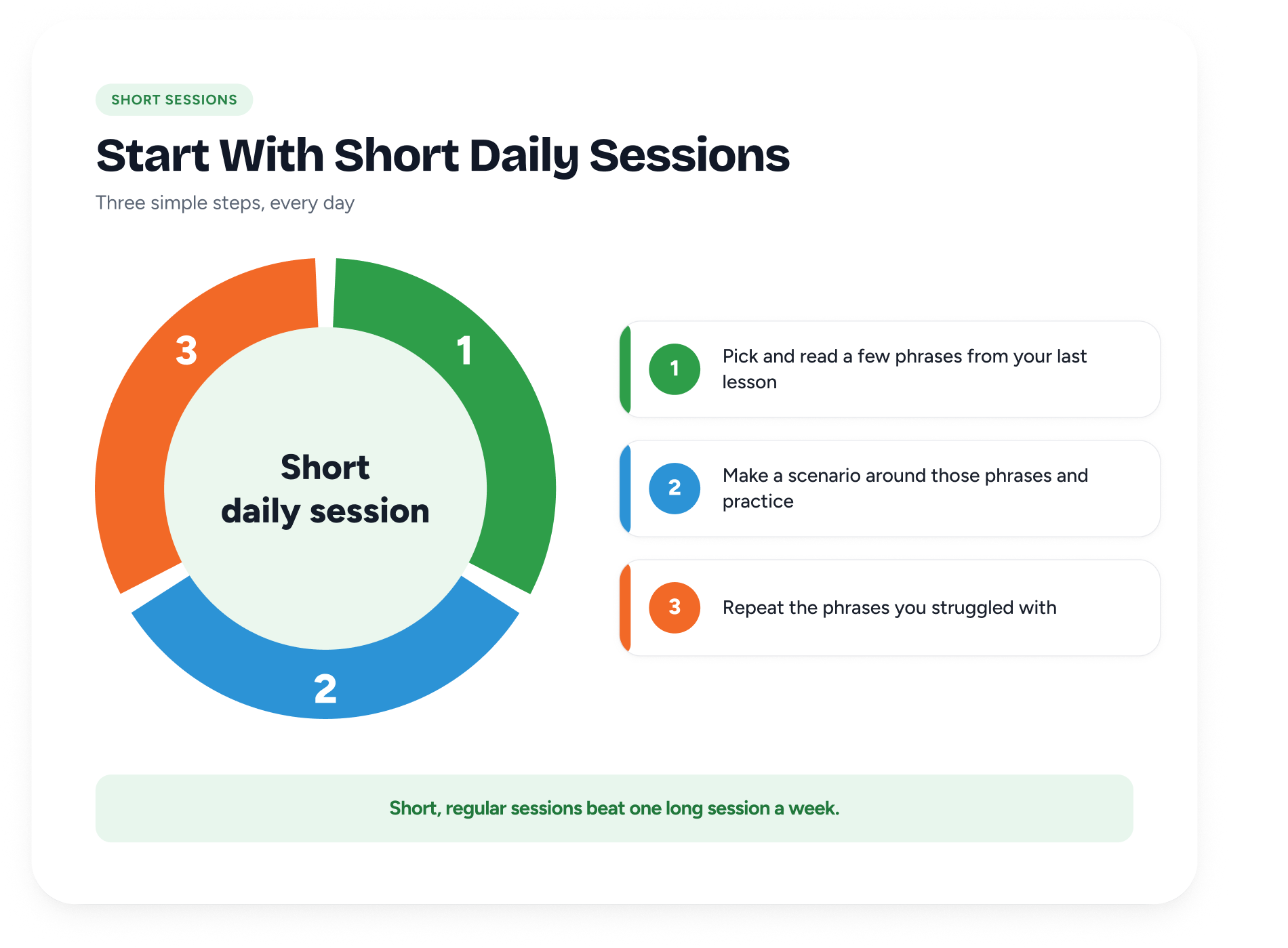
The real question is how to improve speaking ability daily? The key is consistency – taking regular, short sessions daily is better than scheduling something after a week. You can try out the following sample session to get started:
- Pick and read a few phrases from your last lesson.
- Make a scenario around these phrases and practice.
- Repeat the phrases that you’ve struggled with during the session.
Again, the key is to keep sessions short, so you grip what you’ve learned firmly.
Use Self-Talk and Everyday Situations
Now that you’ve established a daily learning routine, how can you make progress from it? You need to practice it with a partner, and the best option is yourself. Narrate your daily routine in the language you’re practicing. This makes it flow, helping you pronounce better. Here are some ideas to get started:
- Try to describe a situation such as making coffee, doing work, etc., something short and useful.
- Try naming the things around you in your target language.
- Planning your day? Practice in your target language.
- Ask and answer questions in full sentences.
The goal is to make yourself fluent. Never mind the grammar or syntax. Once you learn to achieve this, you can practice the technicalities later or in the next session.
Try Role-Play and Conversation Prompts
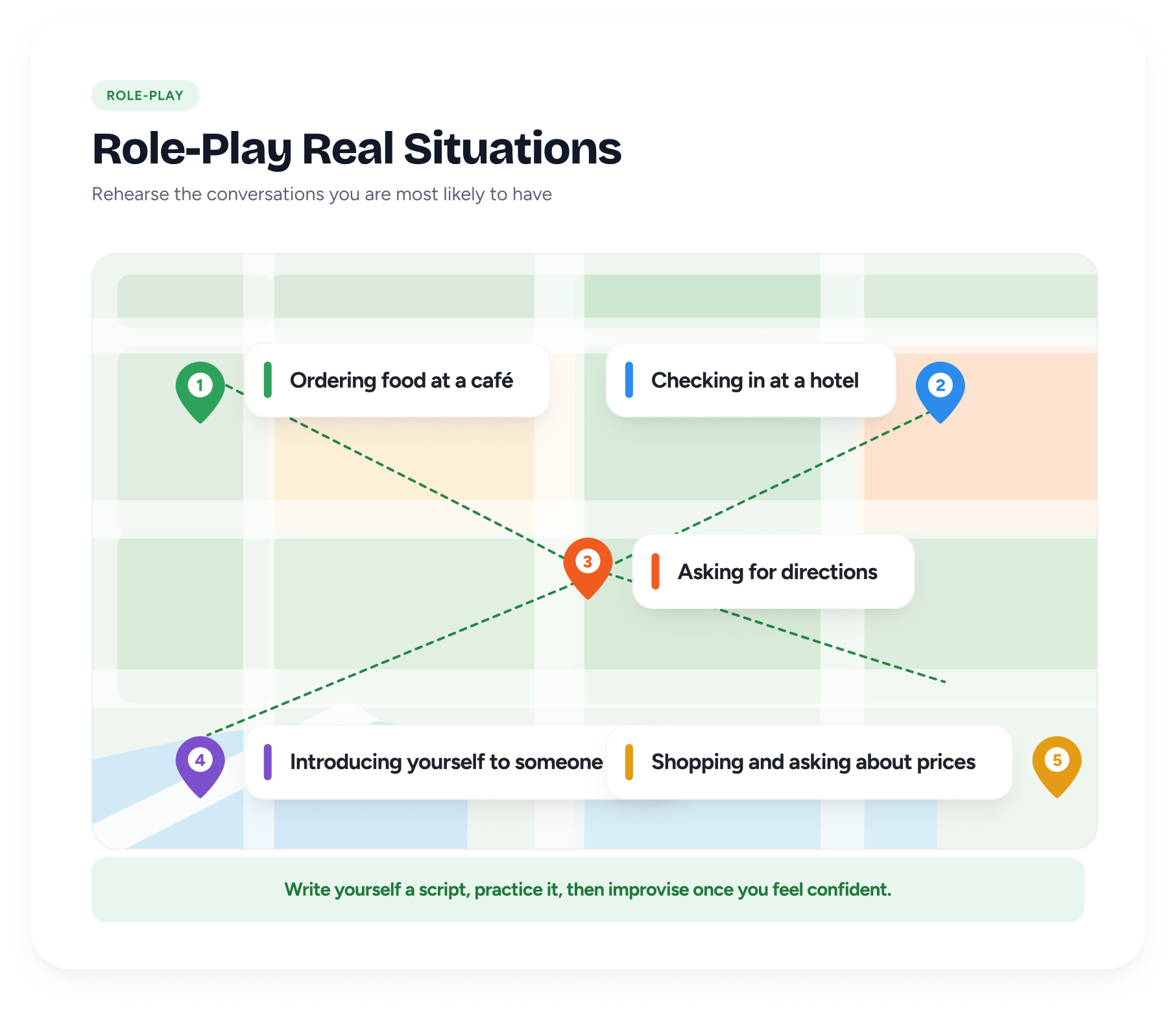
Real conversations are unpredictable. You need to rehearse for different situations and learn to pronounce words in real time. Some common situations can include:
- Ordering food at a café
- Checking in at a hotel
- Asking for directions
- Introducing yourself to someone new
- Shopping and asking about prices
So, how do you practice for such situations? Simple, start by writing yourself a script. A scene of ordering food or asking for directions. Practice these situations, and once you’re confident enough, change the situation to improvise.
Start by asking for directions and then add restaurant recommendations and thanking the person. Adding unpredictable situations can help you focus better. You can also think of practicing sure situations such as an event you’re attending next weekend.
Record Yourself and Review Progress
But if you’re practicing with yourself, then how do you know you’re doing it right or making progress? The answer is to record yourself and then track your progress. It can feel a bit awkward at first, as it’s similar to listening to your voice notes.
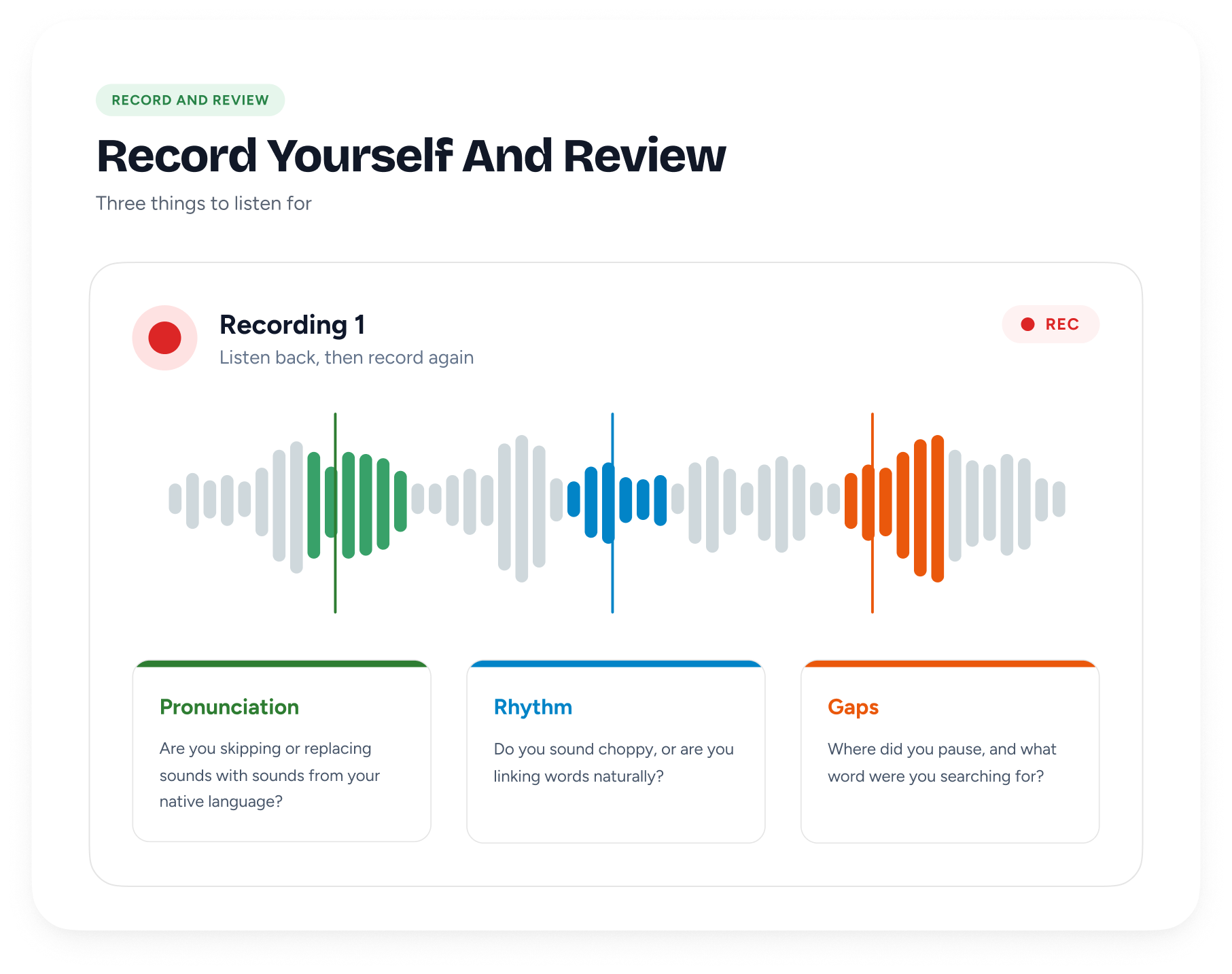
But when you repeat the process, you can actually learn how you’re pronouncing the words, and work on improving them. Here’s how you can do this using your phone or computer:
- Pronunciation: Are there sounds you're skipping or replacing with sounds from your native language?
- Rhythm: Do you sound choppy, or are you linking words naturally?
- Gaps: Where did you pause, and what word were you searching for?
You can compare your pronunciation with native speakers of your targeted language to see the difference. Once you figure out the mistakes, practice and record again. Do this repeatedly until you can speak close to native speakers.
How AI Conversation Practice Can Help
Even if you’re partnering with yourself, some people require a tutor to help them practice since not everyone is comfortable practicing solo. So, what can you do in this case? The best way is to use an AI language-learning app.
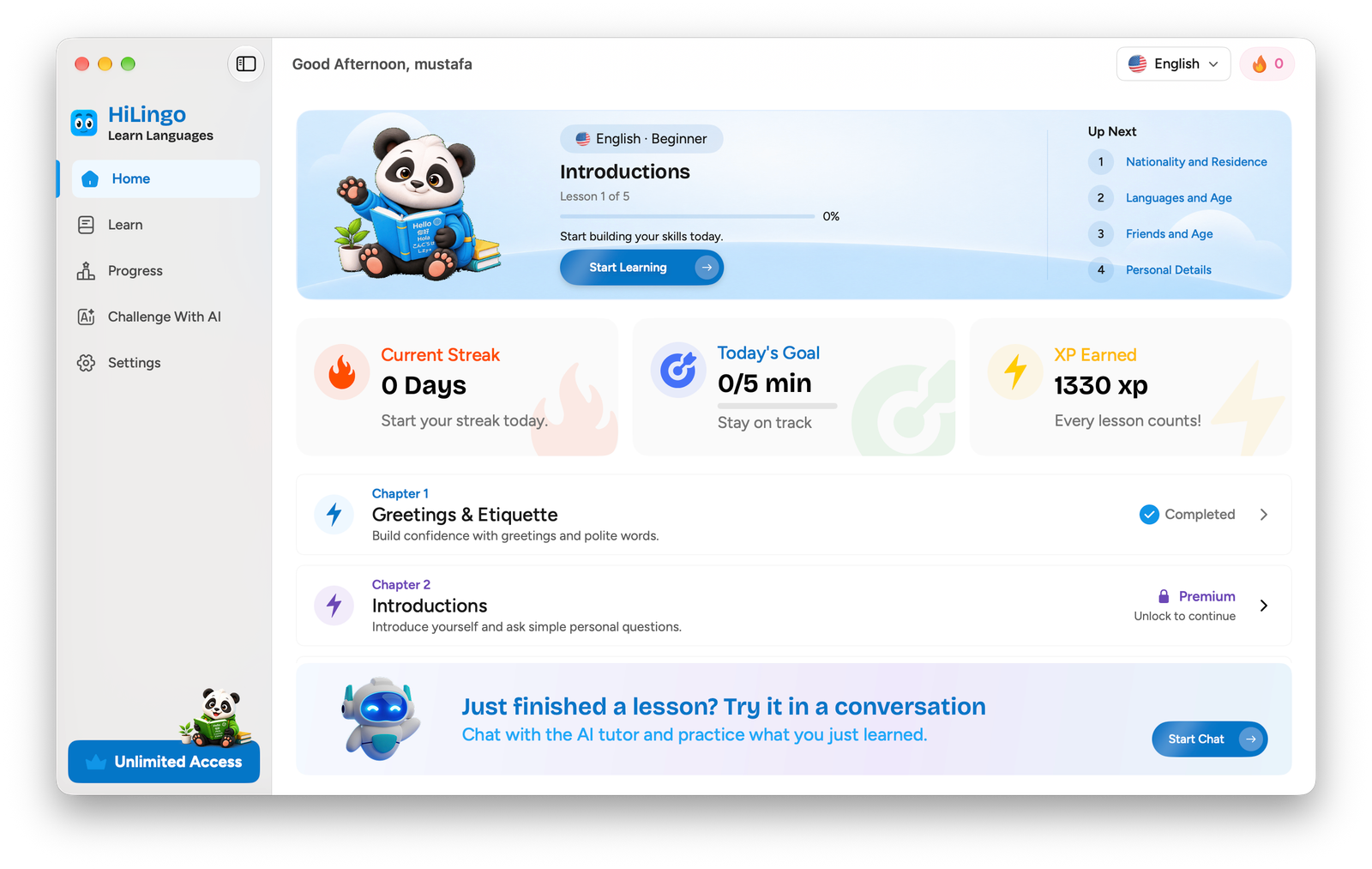
If you’re working on a Mac, HiLingo is one of the recommended apps to get started with for free. It’s an AI-based language learning app, which acts as your personal tutor for learning languages including Spanish, Italian, Japanese, and several others.
One of the intuitive things about HiLingo is that it has a feature called Challenge AI. This allows you to:
- Practice real-time conversations with an AI bot.
- Engage in real-world and practical everyday situations.
- Get feedback on your pronunciation and how to improve.
You also get short lessons and quizzes for improving your vocab and pronunciation, making it one of the best AI language learning apps on the market. It supports macOS 14 or later and is free to start.

Build a Simple Weekly Speaking Routine
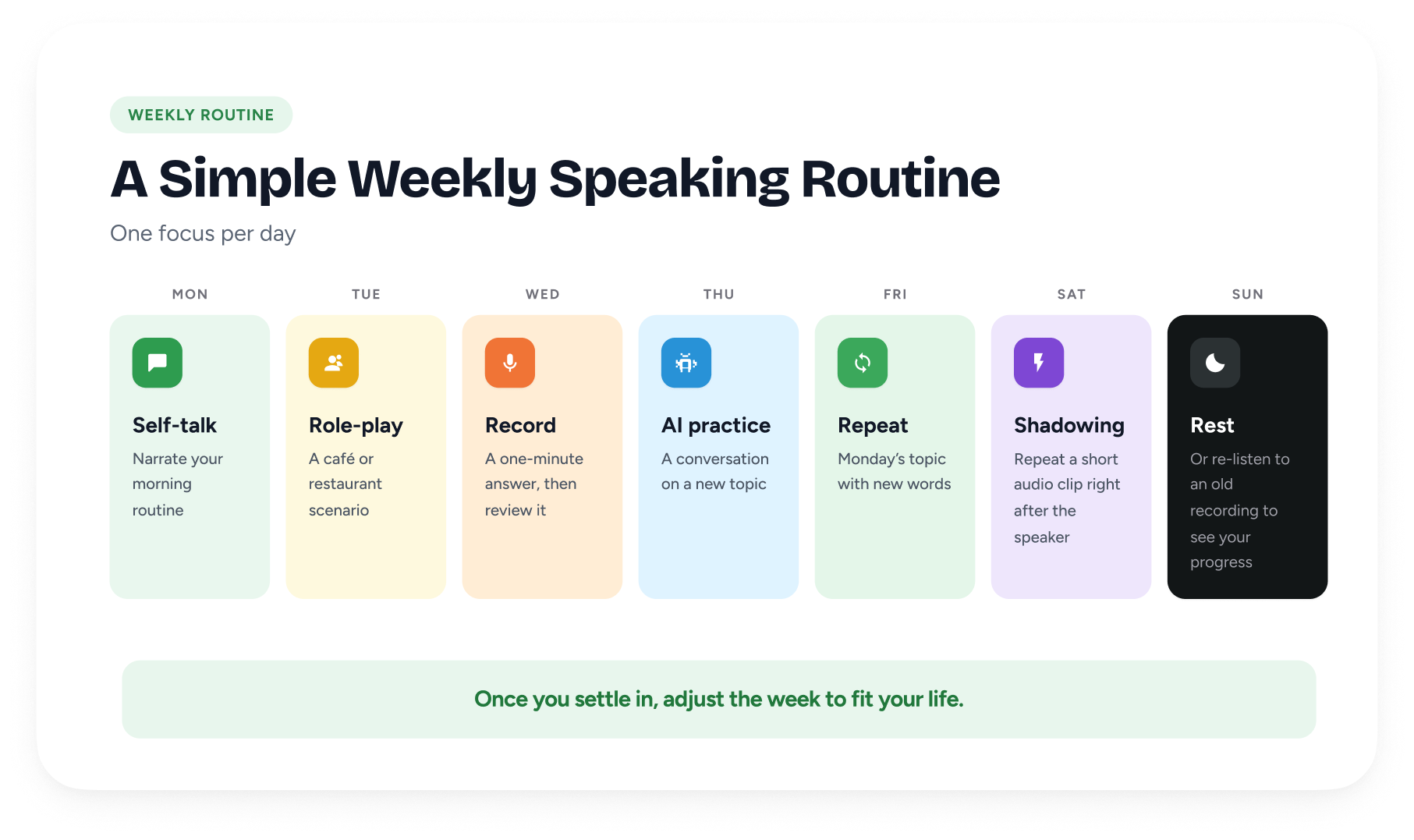
If you’re worried about building your weekly learning routine, here’s a sample that you can work with:
| Day | Focus |
|---|---|
| Monday | Self-talk: narrate your morning routine |
| Tuesday | Role-play a café or restaurant scenario. |
| Wednesday | Record a one-minute answer and review it |
| Thursday | AI conversation practice on a new topic |
| Friday | Repeat Monday's topic, using new words you've learned |
| Saturday | Shadowing: repeat a short audio clip right after the speaker |
| Sunday | Rest, or re-listen to an old recording to see how far you've come |
This gives you an idea of where to get started. Once you adjust to it, you can make changes as required.
Final Tips for Staying Consistent
The key is consistency – you don’t have to judge your progress. Follow these tips for remaining consistent:
- Short sessions – better progress.
- Accept mistakes – overcome fear.
- Practice usefulness – adapt situations.
- Track progress – minimize mistakes.
- Combine various methods – navigate sentences.
Remain patient and consistent. Practice every day with short sessions, and you’ll be fluent in no time!