Guide Your next conversation starts here
AI Language Learning: Benefits, Limitations and How to Use It Effectively
See where AI helps, where it falls short, and how to check its corrections against real-world input.
With AI, language learning has become easier for almost everyone. It explains grammar, rehearses sentences, and even writes a paragraph in your target language. Using it well can help boost language learning confidently. This guide explores how to benefit from AI language learning effectively by navigating its limitations. Let’s explore further:
What Is AI Language Learning?
AI language learning means using software to accomplish learning-based tasks instead of doing it manually. This includes using a general AI chatbot, tutor app, or ordinary language learning apps.
These come with built-in features for practicing language learning. Some of these include conversation practice, pronunciation feedback, learning curve adjustment, etc. AI uses these features to provide each learner with helpful materials to explore according to their requirements.
Where Can AI Tools Help?
The question is, where can AI tools help you in learning a new language? Let’s take a look at it:
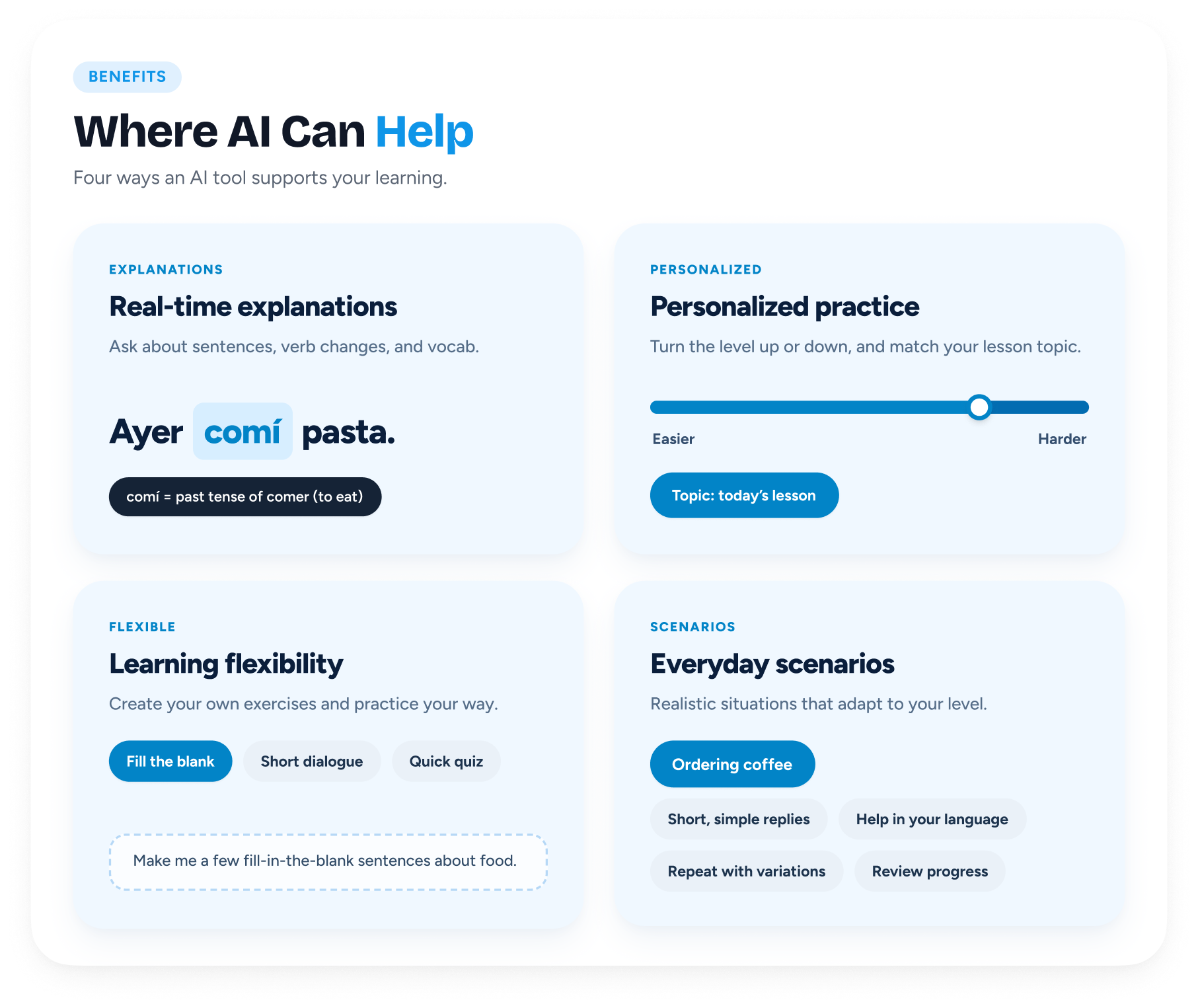
Real-Time Explanations
With an AI language learning tool, you can easily request real-time assistance. This can include explanations of sentences, verb changes, and vocab.
Personalized Practice
Instead of focusing on a simple routine, you can easily request the tool to amp up or lower the level of practice. You can even ask the tool to create a topic according to your current lesson, helping you aim for the level you’re seeking.
Learning Flexibility
With an AI language learning tool, you have the flexibility of creating your own exercises and practicing the way you feel. You can create a customized learning routine fitting your needs in the way you like.
Practicing Conversations and Everyday Scenarios
One of the best things about using an AI tool is that it not only provides practice sessions but also picks realistic situations. These situations adapt to your current level of learning, helping you practice real-world scenarios. This has several benefits, including:
- Keeping replies short and simple.
- Assist in your mother language whenever you get stuck.
- Repeating the exercise with variations to help practice better.
- Review the progress to strengthen learning.
Limitations to Keep in Mind
When an AI tool can assist so much in learning a new language, then what’s stopping everyone from using it to learn their favorite new language? Here are some of the limitations to keep in mind:
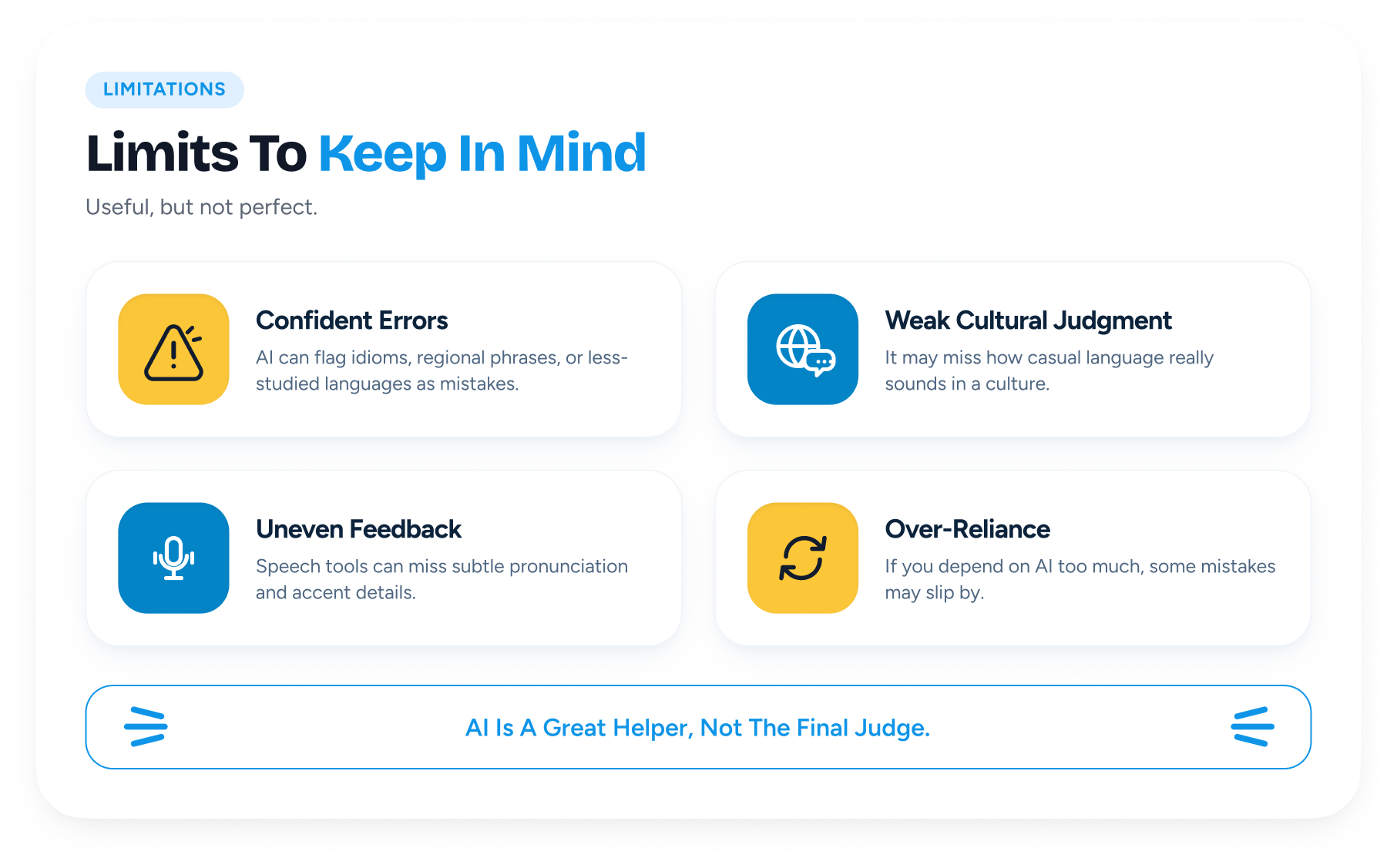
Confident Errors
An AI tool can easily flag idioms, regionally used sentences, and less studied languages as mistakes during your lesson confidently. Unless trained, the tool can result in creating hurdles that don’t even exist in the first place.
Weak Cultural Judgement
Similar to the above, it can lack cultural judgement, especially for sentences spoken casually in any culture. This can result in confusion related to certain phrases and languages and can hinder progress in learning.
Uneven Feedback
AI speech recognition may not catch subtle pronunciations, which can ruin the overall accent. It may also fail to capture your accent and provide useful feedback accordingly.
Over Reliance
Relying too much on AI can hinder your learning progress. The tool can become familiar with your learning curve and may let some errors slide.
How to Check Corrections and Feedback?
The point of using an AI tool is to get reliable feedback. However, the question is: how can you check the corrections and assess the quality of AI feedback? Here’s how:
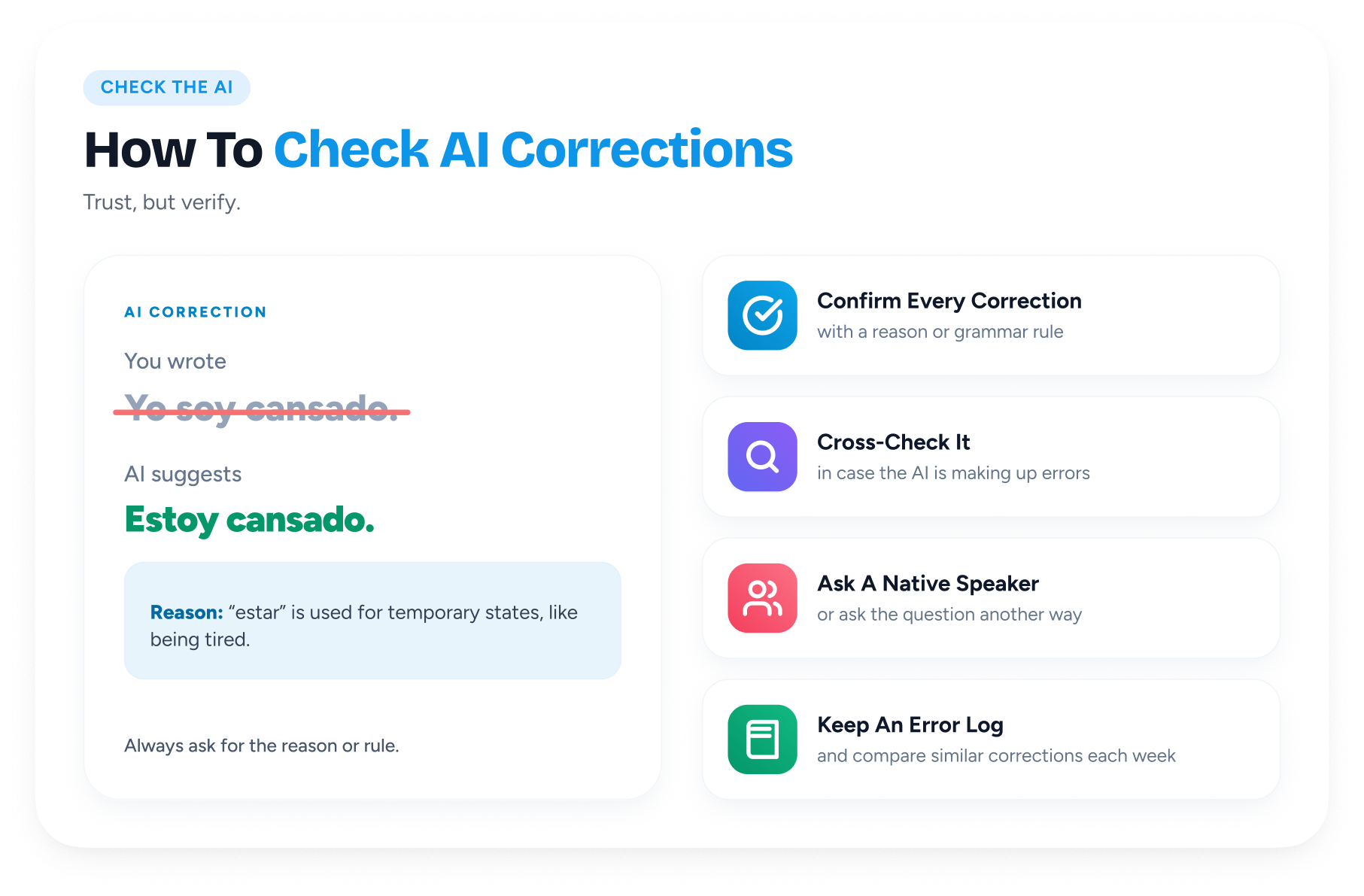
- Confirm every correction with a reason or grammar rule.
- Cross-check corrections to ensure that AI is not hallucinating or creating unnecessary errors.
- Connect with native speakers or ask an alternative question to assess the AI output.
- Keep a log of errors, and compare similar corrections over the week.
Combine AI Practice with Human and Real-World Input
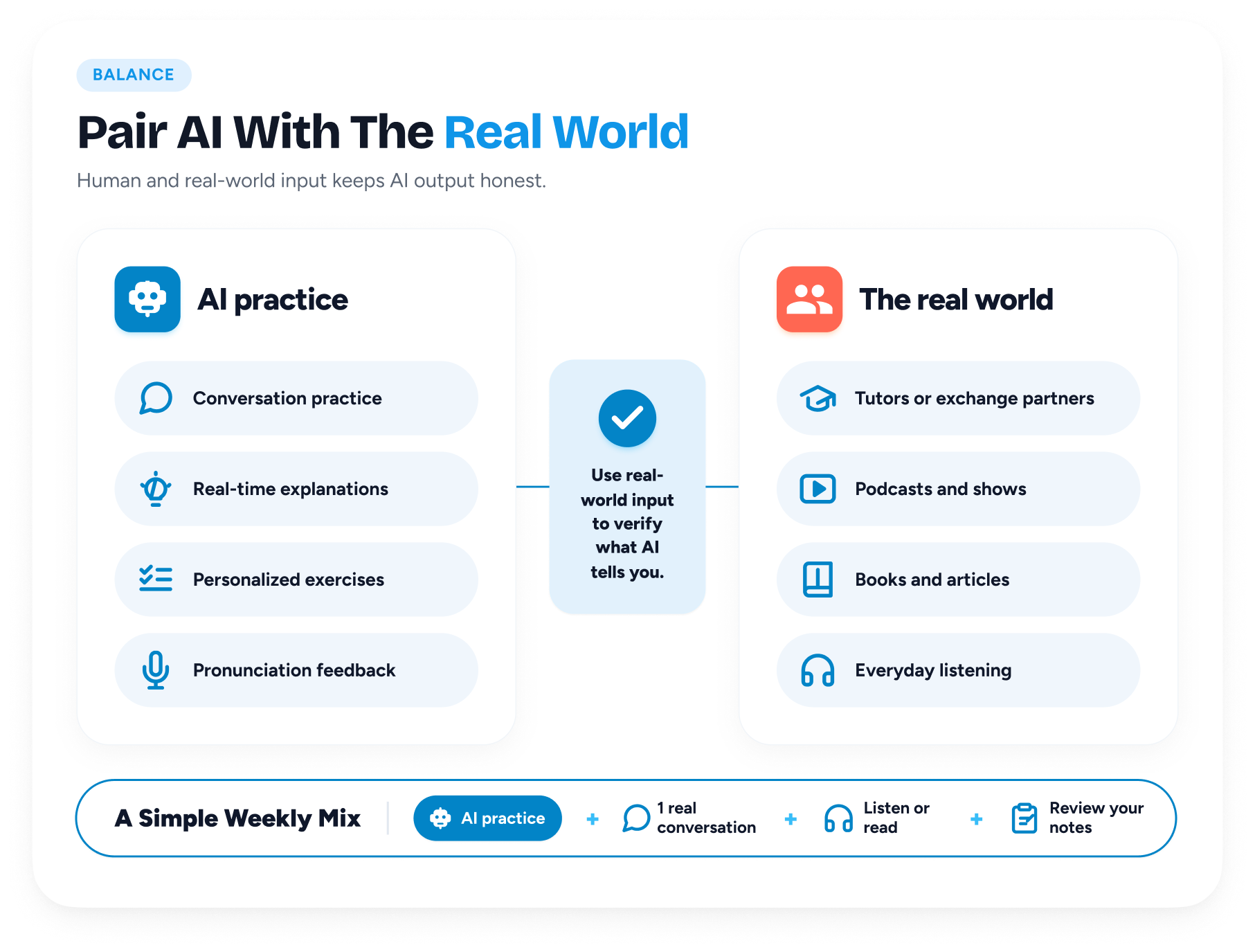
One important thing to note is that you cannot rely on the AI tool for language learning entirely. You need to incorporate another mode to ensure that AI outputs are close to real-world experiences.
For that, you can easily check online for tutors, connect with exchange partners, listen to podcasts, watch shows, or read books. This weekly routine can not only help improve your vocab and learning, but also authenticate the output of your AI tool.
How to Choose an AI Language Learning Tool?
While picking the right AI language learning tool, here’s what to consider:
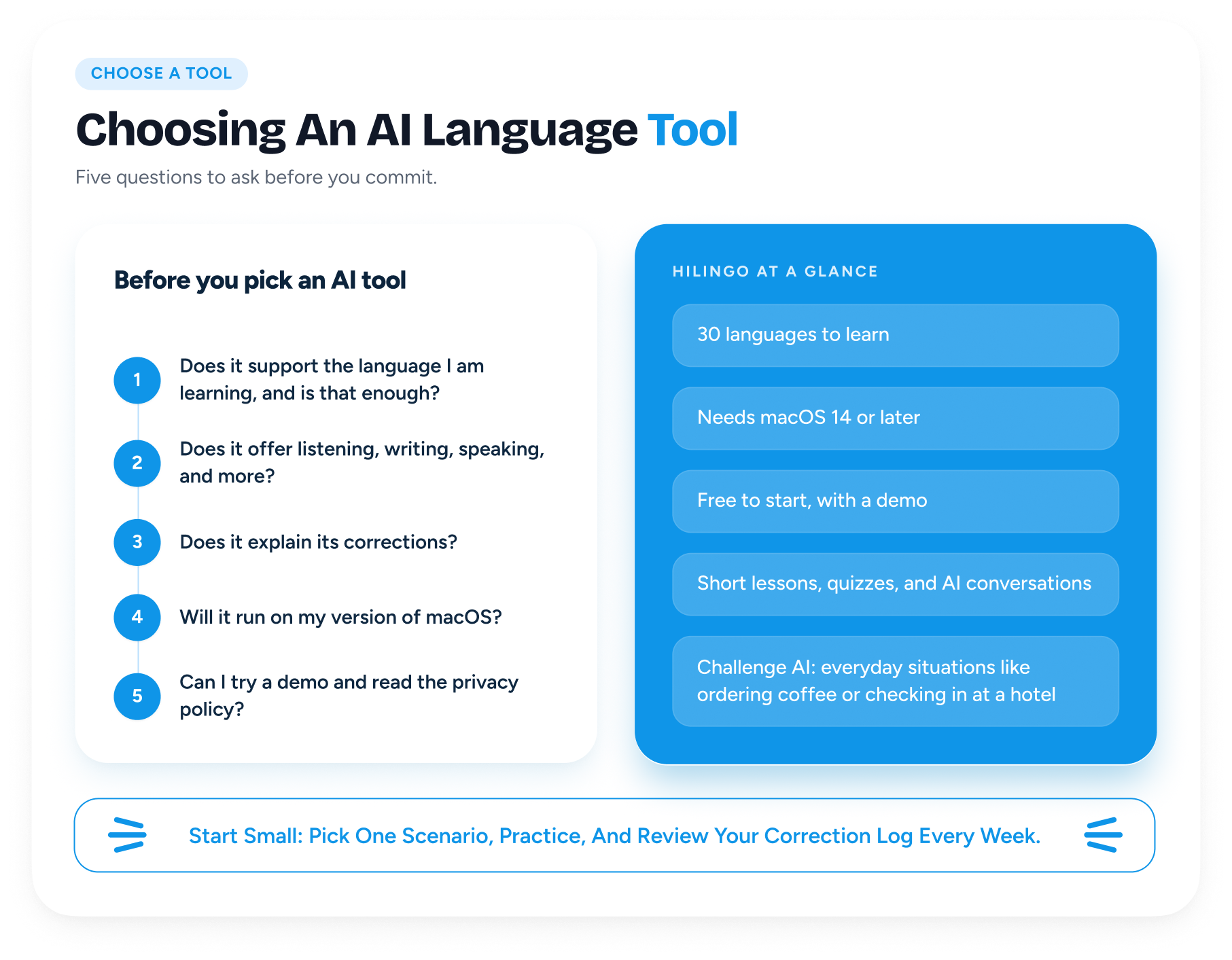
- Does the tool offer support for the language you’re learning? If yes, then does this level of support suffice for your needs?
- Does the tool provide different modes of learning, including listening, writing, speaking, etc.?
- Does it offer corrections with explanation?
- Is the tool compatible with your current version of Mac?
- Can you access a demo version and explore its privacy policy?
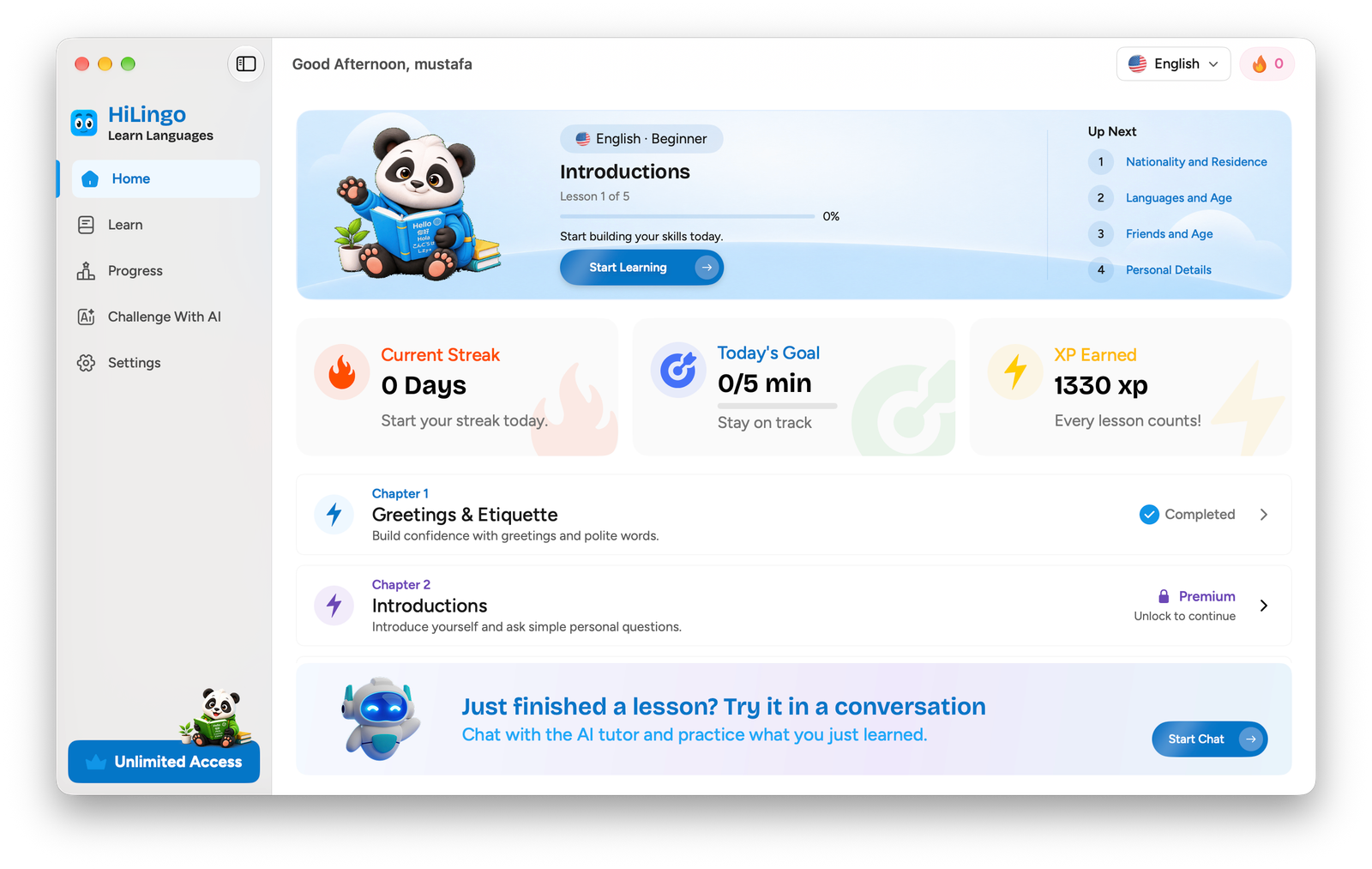
If you study on a Mac, HiLingo's language learning experience for Mac is one dedicated option to look at. HiLingo is a dedicated AI app for Mac users for learning new languages. It combines short lessons, quizzes, and AI conversations, including a Challenge AI feature built around everyday situations such as ordering coffee or checking in at a hotel.
In addition, the app also includes 30 languages to learn, which makes it easier to find your target language. The app requires macOS 14 or later, so ensure that you have the right Mac version. It’s free to start and even has a demo version to try before signing up for a paid version.
Whatever app you’re choosing, ensure that it adheres to the requirements mentioned above to avoid any hassles later.
Is AI Language Learning Right for You?
Using an AI tool for language learning is an excellent self-motivated way of learning a new language. It offers flexibility of learning, includes interactive practice sessions, and offers beginner- to advanced-level learning curves.
Before beginning, ensure that you start small, picking the right scenario for learning and practicing in the time that fits your routine. You can keep a log of your corrections and review them every week to perfect your skills.